

One of the most delicate balancing acts for any actor—especially in community and amateur theatre—is learning how to take direction well without stifling your own instincts and creativity. You want to be directable, of course, as well as adaptable…but you also want to bring your own input and ideas to the role. You are an artist, after all, and theatre is a collaborative effort, in part between you and your director. Striking the right balance is an essential skill set for any actor.
Here’s the good news: these two goals aren’t in conflict. In fact, the best performances come from actors who know how to blend clear direction with their own artistic creativity.
Here are my tips to help you walk that line like a pro—even if you’re just starting out.
- Direction isn’t Criticism—it’s Collaboration.
A director’s job is to help tell the story and shape the bigger picture into a clear, cohesive, thoughtful, artistic and engaging whole. Your willingness and ability to listen and do your part in that collaboration helps them do that. Your co-operation is for the cast, the crew, the playwright, the theatre, and the future audience. So don’t take it as criticism; take it as the chance to help the you and director make the show better.
Also, remember that acting isn’t like painting a picture, where you can stand back and critique your work, making little changes along the way. You can’t see or hear yourself from the audience’s perspective, and it’s really hard to judge how things are going, especially when you’re new at it. Actors need a trained and experienced outside eye with good communication skills. That is the director’s job, and they are there to help you. And trust me, you really, really want them to do it.
- Listen First, React Later
When a director gives you a note, your first job is not to defend your choices—it’s to listen. Resist the urge to explain what you meant to do, and never refuse a note by saying something like “My character wouldn’t do that”. That is a great way to stop forward motion in rehearsal (and, frankly, not get cast a whole lot). Directors need to know that actors can take and apply their notes, otherwise, rehearsals get bogged down into ego matches, at the expense of the play. So, take a breath and listen to what the director is asking for. Take in the note.
- Understand the Why Behind the Note
Even if a direction doesn’t seem to make sense to you, don’t immediately reject it. Sometimes you need to ask for clarification. Your director is probably trying to solve a problem that he sees on stage (the moment isn’t working, they can’t hear you from upper stage right, there are sightlines issues, the pacing is off, etc.). You may not have any idea what the actual problem is, and his note may not have anything to do with your character you the choices you’ve made. It might just be he can’t hear you because someone else is pulling focus, but he needs to try a few things to figure that out. Knowing what the problem is can help you help your director solve it, so if it doesn’t make sense and you’re confused, ask what the issue is.
- Try it Their Way (For Real)
Even if a note feels weird, try it exactly as directed at least once. Not halfway. Not with a silent “but this won’t work” in your head. Fully commit to it. You might be surprised—sometimes another approach unlocks something new in the character. So, understand what is being asked of you, ask a question if you aren’t clear, and then give it your best shot. Do it honestly, as an actor with integrity and commitment to the role. That’s really all the director wants.
Besides, isn’t rehearsal all about experimentation and play? Isn’t that the fun part? Even if you hate the choice you’re asked to work with, trying it doesn’t mean committing forever. It just means really trying.
- Hold Onto What You Bring to the Role
Directors want actors who bring ideas, instincts, and energy. Your choices are what make the character real. Your director cast you for a reason, right? She saw something in you, specifically, and she wanted you for that role. She wanted you to make choices and lend the play your unique, artistic input. Therefore, if a note clashes with something that feels essential to your interpretation, or if you have a great idea, it’s okay to ask questions—politely. For example, “Would you mind if I try something?” or “I see what you’re going for—may I show you an alternative and we see what plays better?”
- Stay Curious, Not Defensive
Defensiveness is truly the enemy of collaboration and growth. Curiosity, on the other hand, opens doors to potential and progress. Every note is a chance to explore a new shade of your character, a new rhythm to the scene, or a deeper emotional layer. And every director has ideas and information that you would never have come up with on your own. They can help you open these doors and create a truly great performance if you’re willing to stay curious and flexible.
- Keep the Big Picture in Mind
As mentioned earlier, theatre is a team effort, an ensemble creation. What works brilliantly in isolation may not serve the scene or story as a whole. Part of taking direction is trusting that your choices live in a larger framework: the whole production. You may need to alter a favourite moment, but the adjustment will serve the telling of the story and the success of the play. Strong actors know that changes don’t mean their work was wrong or bad; it just means it wasn’t right for that moment with these characters for this director in this play.
- Use Rehearsal to Explore
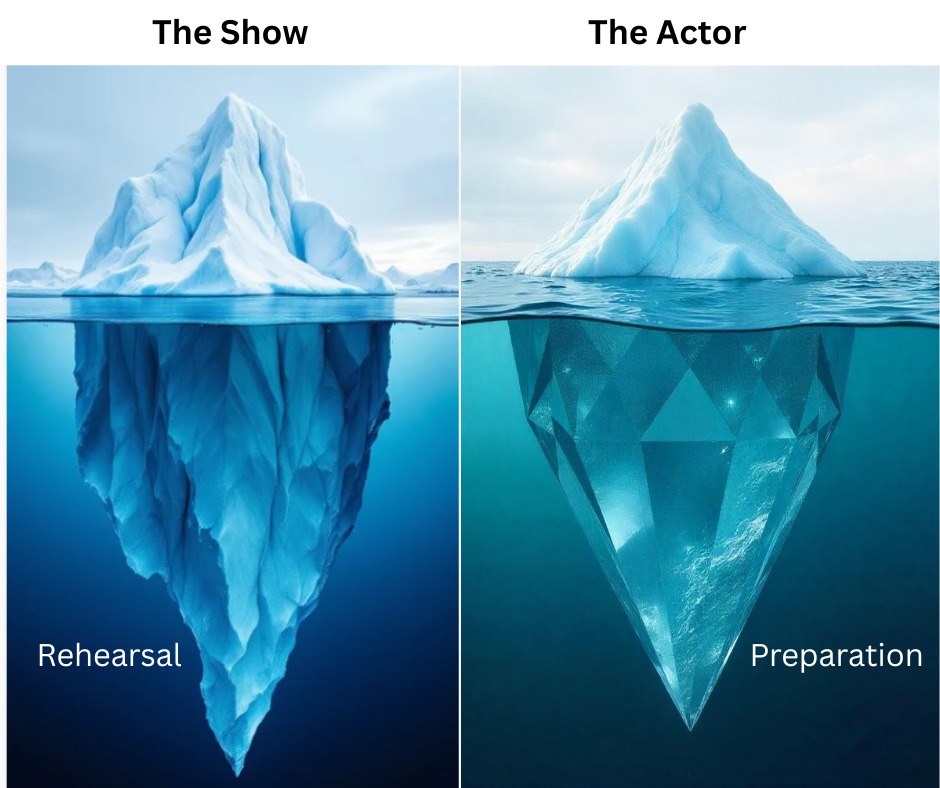
Rehearsals are your playground. Try different versions. Stay in the moment. Challenge yourself. You can always scale back or shift later. But if you never explore beyond your first instinct, or resist your director’s notes to help you, then you’ll be stuck in the beginning phase instead of progressing to the polishing phase. Every time you pivot in the right direction, you get closer to the performance you dream of. So be bold, take risks, remain open, and don’t be afraid of so-called “failure” in rehearsal. Rehearsals are meant to be messy until late in the process. Directors know this, so let them guide you as you play.
My Final Thoughts
You don’t have to choose between being directable and being creative. The best actors are both. Being a good actor doesn’t mean blindly following direction, and it doesn’t mean sticking stubbornly to your first instinct. It means knowing when to adapt, when to ask questions, and how to keep your creative spark alive while honoring the collective vision of the production.
So keep your instincts sharp, your ears open, and your ego in check—and you’ll not only grow as an actor, but become a favorite in any cast. Now go break some legs!!!



0 Comments